


If we had to pick the earliest and most powerful sense in babies, it would be smell, without question. Long before he sees clearly, long before he understands a single word, baby smells. And what he smells is already shaping his memories, his emotions, his sense of security. Here's how this quiet, powerful sense develops — from his mother's womb through his first years of life.
In the Womb: The First Sense to Awaken
By week 24 of pregnancy, baby's nose is already functional. He perceives smells through the amniotic fluid, which carries the scent molecules from what you eat and what surrounds you. This is how baby memorizes, even before birth, the flavors and scents of his family environment , an olfactory imprint that will shape his preferences much later on.
( We talk about this in more detail in our article In utero olfactory connection.)
At Birth: A Nose Already Expert
This is where it gets fascinating: at birth, baby's sense of smell is more developed than his eyesight. He can still only make out blurry shapes a few inches away, but he already recognizes his mother's scent among others, studies show that a newborn just a few days old will preferentially turn toward fabric carrying his mother's scent. This is the sense that guides his very first sense of security, long before language or sight.
0-3 Months: Smell as an Emotional Compass
During these first weeks, when everything else is still blurry and uncertain for baby, smell acts as a compass. A familiar scent, his mother's, a fabric he knows, a ritual repeated every evening — helps him calm down and find a sense of security again. This is often when families introduce a gentle scent ritual at bedtime, which quickly becomes a cue baby comes to expect.
3-12 Months: Building Olfactory Memory
As baby grows, his sense of smell continues to link scents with emotions: the joy of reunions, the calm of bedtime, curiosity toward a new scent. This period lays the groundwork for an olfactory memory that, remarkably, will remain one of the most powerful and lasting throughout life, the famous "Proust's madeleine" effect.
( We talked about this in Madeleine de Proust.)
Why This Sense Deserves Our Care
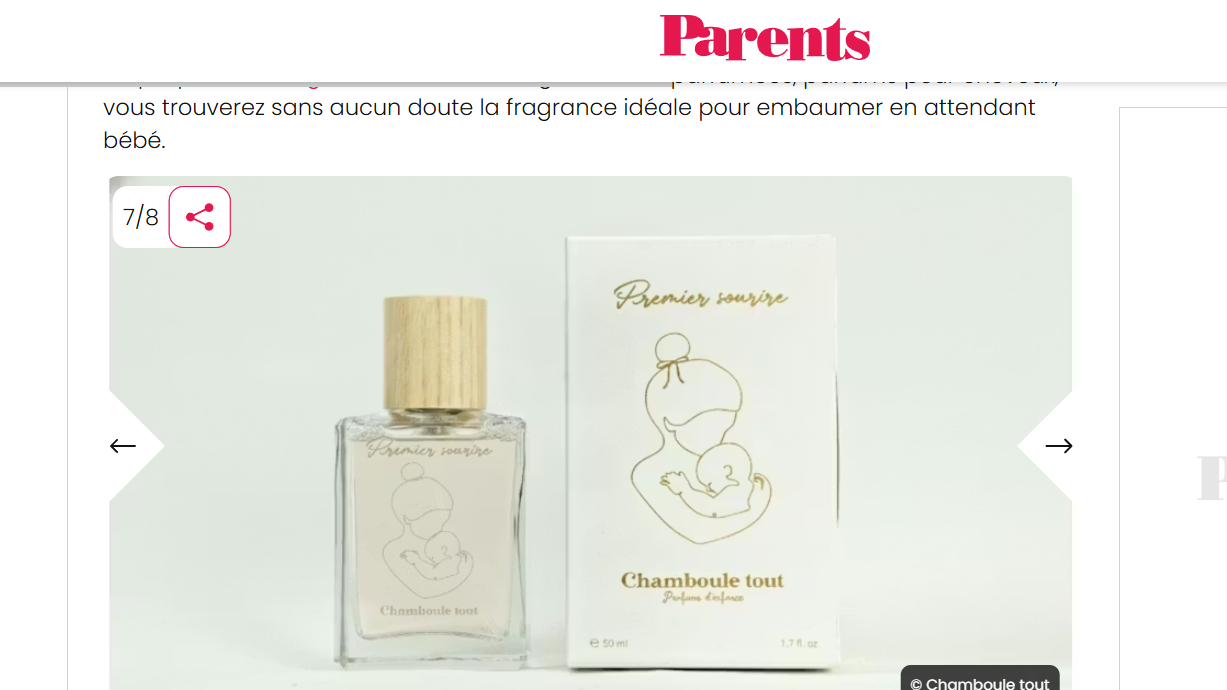
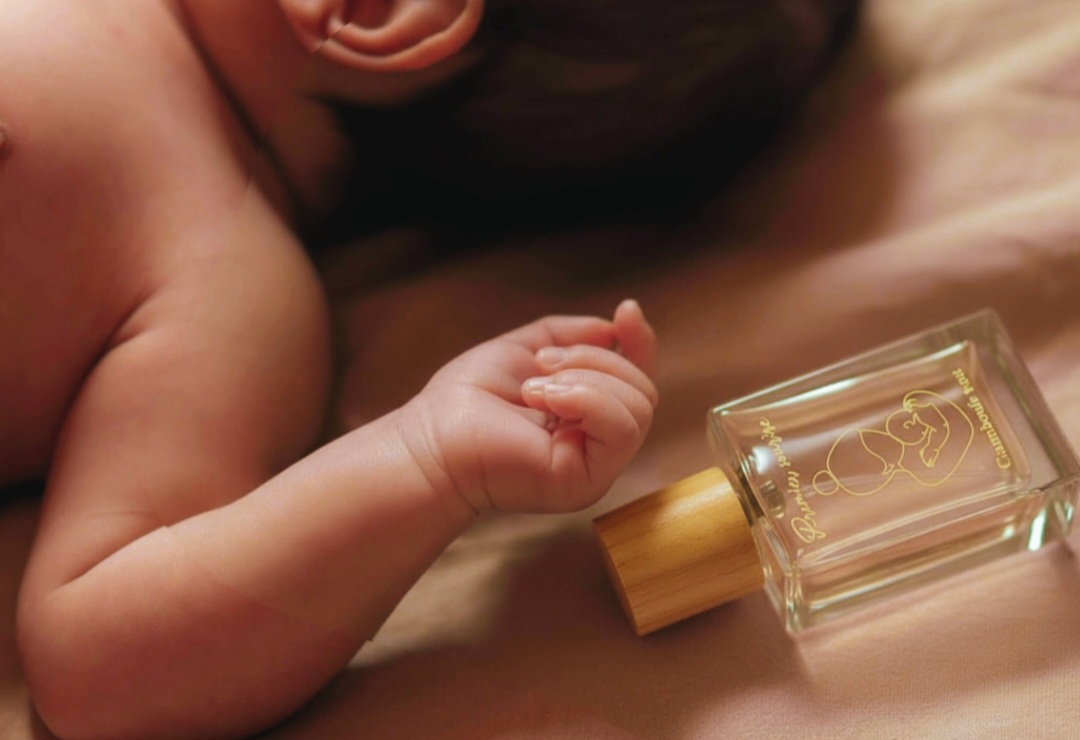
Because baby's sense of smell is early-developing, sensitive, and long-lasting, the scents around him are never a neutral choice. A newborn's skin is thin and permeable, and a conventional perfume — often heavy with alcohol and allergens can be harsh on it, not to mention the molecules it can absorb. That's why we designed Premier Sourire alcohol-free, hypoallergenic, and made with over 95% organic ingredients, so that this precious sense is nurtured gently, from the very first days.